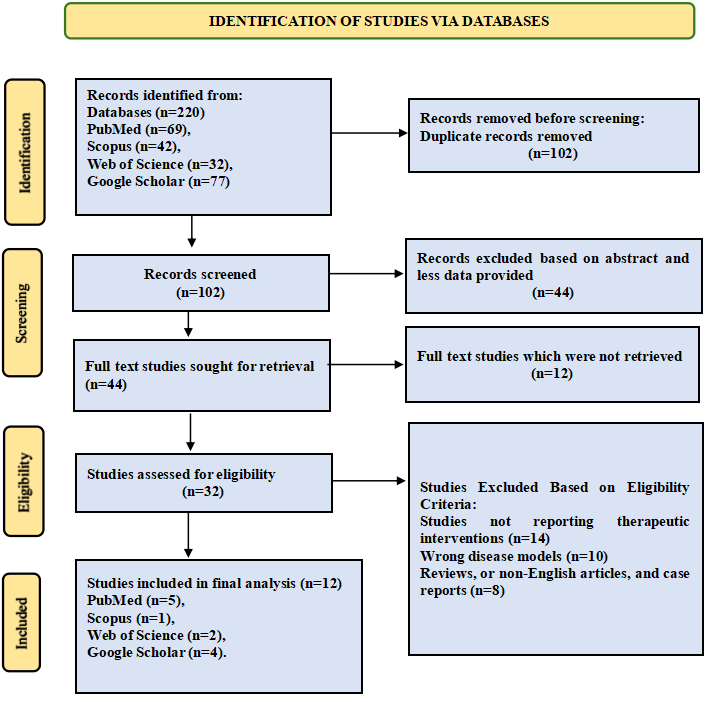
Figure 1: PRISMA Flow Diagram for Study Selection. The flowchart was designed according to the PRISMA guidelines 2020, showing study identification, screening, assessment eligibility, and final selection in the systematic review.
Ehsan Khan1* | Sabeeha Saddique1 | Syeda Maira Gillani2 | Sitara Ejaz2 | Sidra Anwar3 | Uday Shree4
1School of Biochemistry and Biotechnology, University of the Punjab, Lahore, Pakista | 2Department of Biochemistry, COMSATS University Islamabad, Pakistan
3Department of Biology, University of Florence, Florence, Italy | 4Department of Medicine, Southern Regional Medical Center, Georgia
*Correspondence: Ehsan Khan (ahspreparations512@gmail.com)
Received: 15 January, 2026; Revised: 26 February, 2026; Accepted: 05 March, 2026; Published: 10 March, 2026
Background: Mitochondrial dysfunction and bioenergetic instability play key roles in cancer pathogenesis. This study aimed to systematically evaluate the role of mitochondria-targeted interventions in breast, lung, and colorectal cancers. Methods: This systematic review followed PRISMA guidelines 2020. Databases searched included PubMed/MEDLINE, Scopus, Web of Science, and Google Scholar, from 2020 to 2026. Experimental in vitro, in vivo, ex vivo, and clinical studies evaluating mitochondrial pathways or mitochondria-targeted interventions in breast, lung, and colorectal cancers were included, while reviews, editorials, case reports, conference abstracts, and non-English studies were excluded. Risk of bias was assessed using the SYRCLE tool, Cochrane Risk of Bias 2.0, and evidence certainty GRADE framework. Results: Twelve studies meet the inclusion criteria. Findings demonstrated that mitochondrial dysfunction, including OXPHOS inhibition, electron transport chain disruption, mitochondrial membrane depolarization, and ROS overproduction, contributed to tumor progression, chemoresistance, and metastasis. Mitochondria-targeted interventions reduced cancer cell viability, induced apoptosis, and improved treatment response. Risk of bias across studies was moderate, and the certainty of evidence was determined based on the GRADE approach. Conclusions: This review highlights the critical role of mitochondrial dysfunction in cancer progression and the potential of mitochondria-targeted therapies. Future research should focus on clinical translation, combination therapies, and molecular profiling to optimize patient-specific mitochondrial-based interventions.
Keywords: Mitochondrial Dysfunction, Bioenergetic Instability, Oxidative Phosphorylation, Reactive Oxygen Species, Cancer Therapy, Breast Cancer, Colorectal Cancer
Mitochondria play a vital role by acting as intracellular organelles in the production of adenosine triphosphate (ATP) by oxidative phosphorylation (OXPHOS) and regulation of the homeostasis of reactive oxygen species (ROS), apoptosis, and metabolism 1. In healthy tissues, they took care of the cellular energy requirements, redox balance, and metabolic signaling. As in cancer, the structure and functioning of the mitochondrion were often changed, and it was a part of the metabolic reprogramming, enhanced ROS generation, defective apoptosis, and genomic instability, which were major characteristics of tumourigenesis and progression 2.
Breast, lung, and colorectal malignancies were the major causes of cancer-related morbidity and mortality in the world, and there was the emerging evidence that mitochondrial malfunction and related bioenergetic instability were part and parcel of the pathogenesis of these cancers 3. Specifically, mitochondrial OXPHOS-glycolysis (the so-called Warburg effect) and mitochondrial dynamic regulation were found to be the typical features of cancer metabolism, meaning the lack of effective mitochondrial energy regulation and its purpose in supporting the rapid tumour cell proliferation 4.
The parameters being studied in the present study involved: markers of mitochondrial dysfunction (altered copy-number of the mitochondrial DNA, dysregulated fusion-fission dynamics, and aberrant OXPHOS activity), bioenergetic instability (6 changes in ATP production, ROS generation, and reprogramming of metabolic pathways), and, finally, mitochondria-targeted therapeutic interventions (including small molecules, redox modulators, nanotechnology-based delivery systems, and metabolic inhibitors). These parameters were analysed against tumour initiation, progression, treatment resistance and metastasis in breast, lung and colorectal cancers, and it was realized that mitochondrial functionality is of paramount importance in both cancer cell survival and treatment response 5,6.
Mitochondrial metabolic reprogramming enabled tumour plasticity to hypoxia and chemotherapeutic stress, whereas the selective remodeling of mitochondrial pathways was suggested to address therapeutic resistance in models of colorectal cancer 7. Although there was a growing appreciation of the roles played by mitochondria in cancer biology, there were still major gaps in the generalization of evidence in relation to a wide range of major cancer types and in the critical assessment of the potential of mitochondria-targeted therapy in translational research. The prior reviews paid much attention to particular cancers or particular mitochondrial-based pathways, and there was a need to have an integrative synthesis of bioenergetic dysfunction alongside new therapeutic approaches. The use of an integrative approach was thus justified in order to generalize current mechanistic knowledge, determine the efficacy of treatment and research priorities in the future 8,9.
This systematic review aimed to assess and summarize the evidence of mitochondrial dysfunction (Oxidative phosphorylation (OXPHOS) inhibition, electron transport chain (ETC) disruption, mitochondrial membrane potential (Δψm) loss) and bioenergetic instability (TP depletion, increased mitochondrial reactive oxygen species (ROS) production, metabolic reprogramming, and impaired mitochondrial respiration) in the pathogenesis of breast, lung and colorectal cancers and to critically analyse the use of mitochondria-targeted treatments, which would allow building a coherent picture of their pathological roles and therapeutic potential.
This systematic review was done following the PRISMA 2020 guidelines 10. A detailed systematic review protocol was developed, finalized, and verified internally prior to the commencement of data extraction to ensure research transparency and prevent reporting bias. A formal prospective registration code via external repositories was not sought for this specific cycle due to the rapid operational timeline.
Inclusion and Exclusion Criteria: Eligible studies were original articles in vitro, in vivo, ex vivo, and clinical studies that analysed mitochondrial processes and selective therapeutic intervention in Breast cancer, Lung cancer, and Colorectal cancer. Studies were excluded if they were reviews, editorials, case reports, conference abstracts, or non-English publications, as shown in Figure 1.
Data Sources and Search String used: Search was conducted in PubMed/MEDLINE, Scopus, Web of Science, and Google Scholar between January 2020 and February 2026. The search terms included MeSH terms and free-text words related to mitochondrial dysfunction, bioenergetic instability, such as “mitochondria-targeted therapies”, “mitochondrial dysfunction”, “Breast cancer’, “Lung cancer”, and “Colorectal cancer”. Boolean operators (AND, OR) were applied, and reference lists of included studies were manually screened to identify additional eligible articles.
The representative search strings were: ((“mitochondrial dysfunction" OR “bioenergetic instability” OR “oxidative phosphorylation” OR “reactive oxygen species”) AND (“breast cancer” OR “lung cancer” OR “colorectal cancer”) and (“mitochondria-targeted therapy” OR “metabolic inhibitor” OR “OXPHOS inhibitor”)).
Study Selection and Data Extraction: Manual screening of the reference lists of included articles was done. Titles, abstracts, and full texts were screened by two reviewers (SMA, SE) separately. All disagreements were solved by way of discussion with a third reviewer (US). Data extraction was done in the standardized form: author, year, cancer type, study design, model, mitochondrial target/pathway, bioenergetic parameters, intervention, and outcomes.
Quality Assessment: The SYRCLE Risk of Bias tool by SYRCLE was used to assess risk of bias in animal studies, and the Cochrane Risk of Bias 2.0 tool was used to assess clinical studies 11,12. The evidence certainty was established with the help of the GRADE framework.
Figure 1: PRISMA Flow Diagram for Study Selection. The flowchart was designed according to the PRISMA guidelines 2020, showing study identification, screening, assessment eligibility, and final selection in the systematic review.
The total number of records obtained as a result of the four database searches is 220 research articles, 69 records in PubMed, 42 records in Scopus, 32 records in Web of Science, and 77 records in Google Scholar. After the removal of 118 duplicate articles, 102 different articles were left to screen titles and abstracts. After that, 58 were eliminated, and at last, 44 studies were eligible for assessment. Follow-up full-text evaluation led to the exclusion of 32 studies. Finally, 12 studies were included and met all the inclusion criteria in the systematic review. Five of these were obtained in PubMed, one in Scopus, two in Web of Science, and four in Google Scholar.
Table I is a summary of research that explored the Therapeutic Interventions on Mitochondrial Dysfunction Across Breast Cancer, Lung Cancer, and Colorectal Cancer. It summarizes the study design, disease models, population characteristics, sample size, molecular target pathway, outcomes, and key points in each study.
| Author & Study Year | Study Design (Disease model) | Sample Size (Population Characteristics) | Molecular Pathway (Methodology) | Outcomes / Key Findings | Therapeutic implications/intervention |
| Shen et al., 2024 13 | Preclinical experimental, in vitro, and in vivo study (Breast cancer) | Human TNBC cell lines: MDA-MB-468, MDA-MB-436, BT549, HCC1937, HS578T n=20 (Female BALB/c mice n=5/group) | OXPHOS pathway (ETC Complex I (NDUFV1) inhibition leads to OXPHOS suppression, NAD+/NADH imbalance, and mitochondrial ROS induction) | It reduced ATP, disrupted bioenergetics, induced apoptosis, and suppressed tumor growth. | Dihydrorotenone (Complex I inhibitor comparator), Coptisine Phenformin (drug sensitivity analysis). |
| Ahn et al., 2025 14 | Preclinical experimental study, in vitro (Breast cancer) | Human breast cancer cell lines MCF-7, MDA-MB. (Male BALB/c nude mice n=5/group) | Mitochondrial-targeted peptide ((Mito-FF) leads to modulation of mitochondrial apoptosis & antioxidant pathways (SOD2, GPX1, catalase, BCL2 family)) | Increase in Apoptosis, decrease Anti-apoptotic proteins, Altered mitochondrial antioxidant enzymes and less Tumor growth | Mito-FF, Paclitaxel, and Combination therapy are interventions |
| JS et al., 2026 15 | Preclinical experimental study, in vitro (Breast cancer) | Human breast cancer cell lines: MDA-MB-231 and MCF7; MTT | ETC inhibition (Complex I–IV), mitochondrial membrane depolarization; glycolysis inhibition.) | Decrease Cell viability and clonogenic survival, reduce mitochondrial membrane potential, inhibition of ETC Complex I, II/III, IV activity. | Ursolic acid (mitochondrial ETC inhibitor); 2-Deoxy-D-glucose (glycolysis inhibitor). 3-Bromopyruvate (glycolysis inhibitor); combination metabolic targeting |
| Kapan et al., 2025 16 | Preclinical experimental study, in vitro + in vivo (Breast cancer) | TNBC cell lines: MDA-MB-468, MDA-MB-231 Artemia salina (~800–1000 nauplii/group) | Mitochondrial targeting (TPP-conjugated AMPs; OXPHOS inhibition; Δψm depolarization; mitophagy activation; ROS induction) | Decrease OCR; reduce ATP production; also reduce Δψm (JC-1); increase mitochondrial ROS, increase LC3/PINK1/Parkin, decrease tumor sphere formation; decrease colony formation | Triphenylphosphonium (TPP)-conjugated antimicrobial peptides targeting mitochondria in TNBC |
| Zhang et al., 2024 17 | In vitro + in vivo study (Lung’s cancer) | A549, NCI-H1299 (human NSCLC); LLC murine NSCLC cells. (C57BL/6J female mice.) | Mitochondrial ROS generation (ΔΨm depolarization (JC-1); apoptosis activation; immune-related pathway modulation; docking with core NSCLC targets) | Increase Mitochondrial ROS; decrease in ΔΨm (JC-1); increase Caspase-3 expression; reduced tumor growth; cytotoxicity in NSCLC cells | Euphorbiae Humifusae Herba (EHH) active compounds; network-identified core targets; mitochondrial dysfunction induction in NSCLC |
| Wang et al., 2021 18 | Preclinical experimental study, in vitro + in vivo, (Lung adenocarcinoma) | Human lung adenocarcinoma cells A549 & drug‑resistant A549/ADR; ICR mice xenograft model (n=5 mice per group × 5 groups; total = 25) | Mitochondrial dysfunction pathway (Δψm loss (TMRE), ATP depletion, mitochondrial localization, P-gp inhibition) | Decrease Cell viability, increase apoptosis, decrease ATP, decrease migration, decrease tumor growth & weight | DA‑P‑SS‑T/PTX nano micelles (mitochondria-targeted paclitaxel) |
| M et al., 2023 19 | Preclinical experimental study, in vitro + in vivo, (Lung’s cancer) | NSCLC cell lines: BEAS-2B, 1170, H522, H2030, H1299, H2009, H838, A549, H1975, (A/J mice n=10–15 per group) | LKB1 pathway (mitochondrial ROS, cell cycle arrest, apoptosis (Annexin V/PI), GSH depletion) | Reduced cell viability (Reduced colony formation, increased apoptosis, increased mitochondrial reactive oxygen species, reduced tumor number.) | Metformin and Mitomet treatment of colorectal cancer. |
| Zhang et al., 2022 20 | Preclinical experimental study, in vivo, (Lung’s cancer) | Mouse lung adenocarcinoma (LKR13, LKR13-Luc, H2030-BrM3), | It selectively accumulates in mitochondria to increase (mitochondrial reactive oxygen species (ROS), leading to disruption of mitochondrial function and induction of apoptosis.) | Decreased tumor multiplicity and tumor size, increased apoptosis, increased mitochondrial reactive oxygen species, decreased cell proliferation | Mito-HNK, Mito-LND, and combination therapy |
| Wang et al., 2022 21 | Preclinical experimental study, in vitro & in vivo, (Colorectal cancer) | HCT-116 human colorectal cancer cells; (C57BL/6 mice (8 mice/group)) | Mitochondria-targeted antimicrobial peptide (M27-39 delivered via folic acid-modified mesoporous carbon nanoparticles (FA-MCNs)). | Decreased tumor proliferation, increased apoptosis, increased mitochondrial ROS, decreased mitochondrial membrane potential | M27-39 FA-MCNs, which is the mitochondria-targeted antimicrobial peptide M27-39 loaded into folic acid-modified mesoporous carbon nanoparticles |
| Wang et al., 2025 22 | Preclinical experimental study, in vitro + in vivo, (colorectal cancer) | HCT116 and HCT116/OXA colorectal cancer cells (BALB/c nude mice) | Induction of mitochondrial ROS (ATP depletion, loss of MMP, activation of Bax/Caspase-mediated mitochondrial apoptosis. Mitochondria-targeted delivery enhancing ROS-mediated apoptosis and proliferation inhibition) | Reduced tumor volume, increased TUNEL apoptosis, decreased Ki-67 proliferation, systemic toxicity Increased ROS, reduced ATP, mitochondrial, synergistic cytotoxicity | OXA@Exo-RD (oxaliplatin-loaded, cRGD/DQA-modified exosomes) |
| Fu et al., 2021 23 | Preclinical experimental study, in vitro, (Colorectal cancer) | HCT116 and SW620 human CRC cells | Mitochondrial reactive oxygen species–mediated intrinsic apoptotic pathway (Increased Bax, decreased Bcl-2, cytochrome c release, and activation of caspase-9 and caspase-3.) | Reduced cell viability, increased intracellular reactive oxygen species, enhanced apoptosis, and activation of mitochondrial apoptosis signaling | Resveratrol treatment. of colorectal cancer |
| Mathur et al., 2024 24 | Preclinical experimental study, in vitro (Colorectal cancer) | Human colorectal cancer cells HT29, HCT15, HCT116, Colo205 | Mitochondrial bioenergetics and ETC pathway: (mtDNA copy number, RC complexes I, IV, V activity, mitochondrial membrane potential) | Reduced cell viability, decreased mitochondrial DNA copy number, impaired electron transport chain activity, lowered ATP production, decreased mitochondrial membrane potential, and increased ROS levels. | Antibiotics (Chloramphenicol, Tigecycline, Tetracycline) ± Oxaliplatin in treatment of colorectal cancer. |
| TNBC = Triple-negative breast cancer, NSCLC = Non-small cell lung cancer, CRC = Colorectal cancer, IC50 = Half-maximal inhibitory concentration, ETC = Electron transport chain, OXPHOS = Oxidative phosphorylation, ROS = Reactive oxygen species, Δψm / MMP = Mitochondrial membrane potential, ATP = Adenosine triphosphate, BN-PAGE = Blue native polyacrylamide gel electrophoresis, FA-MCNs = Folic acid-modified mesoporous carbon nanoparticles, TPP = Triphenylphosphonium, AMP = Antimicrobial peptide, Bax / Bcl-2 = Bcl-2-associated X protein / B-cell lymphoma 2, TMRE = Tetramethylrhodamine, ethyl ester, H2-DCFDA = 2′,7′-dichlorodihydrofluorescein diacetate, JC-1 = 5,5′,6,6′-tetrachloro-1,1′,3,3′-tetraethylbenzimidazolylcarbocyanine iodide, MTT = 3-(4,5-Dimethylthiazol-2-yl)-2,5-diphenyltetrazolium bromide, cRGD / DQA = Cyclic Arg-Gly-Asp peptide / Dequalinium | |||||
These indicated that mitochondrial dysfunction and bioenergetic instability were significant in the progression of breast, lung and colorectal cancer. The key molecular pathways that were disturbed were inhibition of oxidative phosphorylation (OXPHOS), electron transport chain (ETC) dysfunction, mitochondrial membrane depolarization, and mitochondrial reactive oxygen species (ROS). These changes caused the loss of ATP, oxidative stress, and activation of intrinsic apoptotic pathways. In various cancer models, mitochondria-targeted interventions decreased cell viability of tumour, inhibited tumour cell proliferation and induced apoptosis by activating caspases and mediating mitochondrial signals. Mitochondrial metabolism and bioenergetic pathways as effective treatment of cancer.
In all twelve studies, design-specific instruments such as the Adapted JBI Critical Appraisal Checklist for observational cross-sectional studies, clinical studies using the Cochrane Risk of Bias 2.0 tool, the SYRCLE risk of bias tool in animal studies and modified in vitro risk of bias tools for experimental studies were used. The overall risk was moderate. The observational cohort studies were characterized by low bias because of strict selection of patients and standardized assays. The risks were moderate in observational cross-sectional, experimental and preclinical studies, which were mostly due to lack of randomization reporting, lack of blinding, and justification of the sample size. The overall certainty of evidence according to the GRADE framework was low, as shown in Table II.
| Risk of bias assessment for clinical studies using Cochrane Risk of Bias 2.0 tool | ||||||
| Author /Year | Random Sequence | Blinding Assessment | Incomplete Data | Selective Reporting | Other Bias | Overall Risk |
| JS et al., 2026 15 | Unclear (not applicable) | Unclear (not stated) | Low (complete assay) | Low (clear findings) | Low (lab control) | Moderate |
| Kapan et al., 2025 16 | Low (group randomization) | Unclear (not stated) | Low (complete data) | Low (reported) | Low (controlled design) | Moderate |
| Fu et al., 2021 23 | Unclear (not applicable) | Unclear (not stated) | Low (complete assay) | Low (reported outcomes) | Low (lab control) | Moderate |
| Mathur et al., 2024 24 | Unclear (not applicable) | Unclear (not reported) | Low (complete data) | Low (reported results) | Low (controlled design) | Moderate |
| Risk of bias assessment for Preclinical Studies using SYRCLE Tool for Animal Studies | ||||||
| Author /Year | Random Sequence | Blinding Assessment | Incomplete Data | Selective Reporting | Other Bias | Overall Risk |
| Shen et al., 2024 13 | Unclear (not reported) | Unclear (not mention) | Low (complete data) | Low (clear results) | Low (controlled model) | Moderate |
| Ahn et al., 2025 14 | Unclear (not described) | Unclear (no blinding) | Low (full dataset) | Low (reported outcomes) | Low (standard model) | Moderate |
| Zhang et al., 2024 17 | Unclear (not specified) | Unclear (unclear blinding) | Low (complete results) | Low (reported outcomes) | Low (validated models) | Moderate |
| Wang et al., 2021 18 | Low (random groups) | Unclear (not mentioned) | Low (complete results) | Low (clear reporting) | Low (standard model) | Moderate |
| M et al., 2023 19 | Unclear (not described) | Unclear (not stated) | Low (complete dataset) | Low (reported findings) | Low (experimental control) | Moderate |
| Zhang et al., 2022 20 | Unclear (not stated) | Unclear (not mentioned) | Low (complete data) | Low (reported outcomes) | Low (animal model) | Moderate |
| Wang et al., 2022 21 | Low (random allocation) | Unclear (not stated) | Low (complete data) | Low (reported results) | Low (controlled design) | Moderate |
This systematic review revealed the primary importance of mitochondrial dysfunction and bioenergetic instability in breast, lung, colorectal cancer pathogenesis and proves the potential therapeutic benefits of mitochondria-targeted interventions. There were some common mitochondrial pathways involved in the involved studies which included oxidative phosphorylation (OXPHOS) dysfunction, large-scale production of reactive oxygen species (ROS), changes in mitochondrial membrane potential, and activation of mitochondrial-mediated apoptosis pathways 25. It was found that several studies citing the mitochondrial metabolism were effective in decreasing tumor cell viability and proliferation 26.
As an illustration, electron transport chain complexes inhibition and OXPHOS suppression led to the reduction of ATP production and metabolism-related stress in cancer cells, which eventually caused apoptosis or growth arrest. These results confirm the increasing knowledge that mitochondrial metabolic reprogramming is not just the result of cancer but also a cause of tumor progression and survival processes 27,28. These findings were aligned with other studies that show mitochondrial adaptations are involved in oncogenic metabolic plasticity. It has been demonstrated that cancer cells can adjust their bioenergetic programs to endure hypoxic or nutrient-deprived conditions, which can be glycolysis or mitochondrial respiration based on environmental needs 29,30.
On the same note, previous studies had also indicated that over-production of ROS by dysfunctional mitochondria may facilitate DNA damage, genomic instability and tumor progression besides acting as a viable therapeutic target 31,32. The mitochondria-targeted molecules used in a number of the studies in this review proved to disrupt cancer cell bioenergetics by mitochondrial inhibitors, redox-modulating agents, and mitochondria-directed pro-apoptotic molecules 33. The findings are consistent with experimental data that indicate that tumor cells can be sensitized to therapy by selective targeting of mitochondrial pathways and resistance mechanisms can be overcome 34.
Moreover, the therapeutic approaches reported in the studies included are indicative of the general trends in the field of mitochondrial oncology studies. Research has recently identified the importance of mitochondrial dynamics, such as fission, fusion, and mitophagy in the process of controlling cancer cell survival and response to treatment 35,36. Inhibiting these pathways can also be effective at improving the effects of anticancer therapy by inducing mitochondrial dysfunction and facilitating programmed cell death. Also, various works have mentioned that the use of mitochondria-targeted therapy and traditional chemotherapy or targeted agents could have synergistic effects, resulting in better treatment outcomes 37,38. The results of this review hence support the idea that mitochondrial pathways are potentially effective therapeutic targets in various types of cancer 39.
However, in the interpretation of the results of this systematic review, there were a number of limitations that must be taken into account. First, the quantity of involved studies was comparatively small, which can mean that the conclusions were limited in scope. Second, the proportion of included research was high with large percentage of preclinical studies such as in vitro and animal studies, which may not accurately reflect the complexity of human tumor biology. Experimental models, study designs, and therapeutic interventions also undertook heterogeneity across studies and thus made it difficult to compare the studies directly. Moreover, it is impossible to rule out publication bias since such studies that find positive results have higher chances of publication than those with negative or inconclusive results.
The studies themselves were limited as well. The number of studies with small samples or an inability to conduct experiments on a large scale could influence the strength of the results. Other studies were done on limited cancer cell lines or animals, and this might not clearly reflect the heterogeneity of clinical cancers. Also, differences in dosing schedules, treatment response periods, and measures of therapeutic outcomes can affect the determination of therapeutic efficacy. The underlying molecular pathways of mitochondrial targeting have not been completely understood in some of the studies and thus, further mechanistic studies are required.
The needs of future research should be based on the possibility of translating the promising results of preclinical research into clinical practice. Extensive clinical trials are necessary to assess the level of safety, efficacy, and therapeutic opportunities of mitochondria-targeted interventions in cancer patients. Moreover, future research ought to examine combination therapies that involve mitochondrial targeting and the current anticancer interventions like chemotherapy, immunotherapy, or targeted therapy. Molecular profiling and precision medicine can also assist in identifying the most probable patient subgroups in which the mitochondrial-based therapeutic interventions are likely to work. Lastly, additional research must be done on the contribution of mitochondrial signaling pathways, metabolic flexibility and mitochondrial dynamics to cancer progression to recognize new therapeutic targets.
Mitochondrial dysfunction and bioenergetic instability are the main contributors to the etiology of breast, lung, and colorectal cancers. It is proven that disturbances in oxidative phosphorylation, the function of the electron transport chain, mitochondrial membrane potential, and the regulation of ROS stimulate the progression of tumors, their survival, and resistance to therapeutic methods. ETC inhibitors, redox modulators, and pro-apoptotic agents, mitochondria-targeted interventions, were able to decrease the viability of cancer cells, induce apoptosis, and improve response to treatment.
The number of studies with small samples or an inability to conduct experiments on a large scale could influence the strength of the results. More research needs to be conducted to maximize administration, test combination therapy, and investigate patient-specific molecular profiling to maximize the benefits of mitochondria-based cancer therapeutics.

AL-NAJAM Journal of Medical and Life Sciences, Al Najam J Med Life Sci 2026:1(1), p19-26 (anjmls.org) © 2026 Authors. This work is published by Multidisciplinary Scholarly Advancement and Research MSAR Institute. The full terms of Journal Publishing policy is available at https://anjmls.com/index.php/anjmls/publishing-license and incorporate the Creative Commons Attribution – Non Commercial (CC BY, NC 4.0) License https://creativecommons.org/licenses/by-nc/4.0/. By accessing the work you hereby accept the Terms. Non-commercial uses of the work are permitted without any further permission, provided the work is properly attributed. Publisher’s Note: MSAR Institute remains neutral with regard to jurisdictional claims in published maps and institutional affiliations, and assumes no liability for the scientific accuracy or clinical efficacy of the content herein, as they rest entirely with the authors.