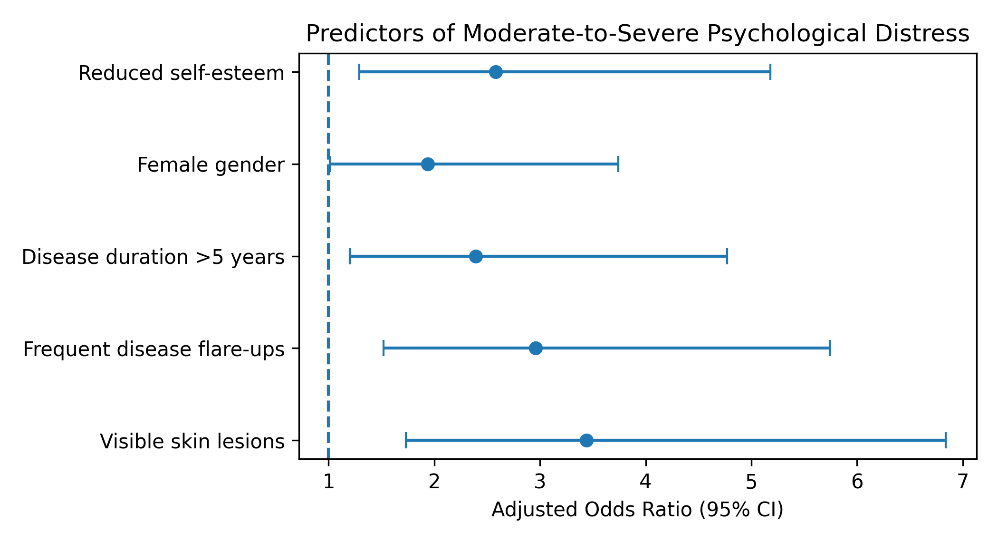
Figure 1: Forest plot of factors independently associated with of moderate-to-severe psychological distress.
Shaista Ahmed1 | Kiran Rehman1 | Ayisha Yousaf2*
1Department of Pathology, Farooq Hospital, Lahore, Pakistan | 2School of Biochemistry and Biotechnology, University of the Punjab, Lahore, Pakistan
*Correspondence: Ayisha Yousaf (ayshayousuf67@gmail.com)
Received: 07 August, 2026; Revised: 08 September, 2026; Accepted: 12 September, 2026; Published: 20 September, 2026
Background: Emotional well-being, self-esteem, social interactions, and quality of life are all impacted by chronic skin conditions. This study aimed to determine the psychological health of affected individuals and identify factors associated with moderate-to-severe psychological distress. Methods: This study included 180 consecutively recruited adults with chronic dermatological conditions at a tertiary care teaching hospital. The disease characteristics, duration, frequency of flares, visibility of the lesions, dermatology activity, psychological health, social functioning, coping strategies, and dermatology-related quality of life were evaluated by interview, validated questionnaires, clinical examination, and medical-record review. The data were analysed using SPSS version 26.0. Descriptive statistics were used to summarize the characteristics of the participants, and Chi-square or Fisher's exact tests were used to assess the association. Moderate to severe psychological distress was predicted by independent variables using multivariable logistic regression, with a P-value <0.05 as significant. Results: The mean age was 36.8 ± 13.7 years, and 57.2% were female. The most common diagnoses were psoriasis 64 (35.6%) and eczema 54 (30.0%). 110 (61.1%) had moderate-to-severe psychological distress, 99 (55.0%) had lowered self-esteem, and 98 (54.4%) had social avoidance. Frequent flare-ups (AOR=2.96), reduced self-esteem (AOR=2.58), disease duration >5 years (AOR=2.39), female gender (AOR=1.94), and visible skin lesions (AOR= 3.44) were the strongest independent predictors of distress. Conclusions: Psychological and social impairments were significant with chronic skin diseases. Psychological assessment, counselling, and referral should be a part of dermatology care. Future multicenter longitudinal studies should assess integrated long-term dermatological and psychological management.
Keywords: Chronic Disease; Psychological Distress; Psychological Well-Being; Self Concept; Skin Diseases
Skin diseases that can be treated over an extended period of time are chronic diseases, such as psoriasis, eczema/atopic dermatitis, hidradenitis suppurativa, vitiligo, and alopecia areata 1. They are not only burdened by skin symptoms, but by pain, pruritus, sleep abnormalities, flares, and the need for treatment, which may be associated with difficulties in daily activities and emotional functioning 2. In a review, pooled prevalence of stress, depression, and anxiety was reported as 39.4%, 27.2%, and 28.8%, respectively, in patients with skin diseases 3. The morbidity experienced by young people and adults with atopic dermatitis is also higher for depression, anxiety, and suicidal ideation 4.
Skin is central to appearance, identity, and interpersonal communication, and visible lesions can result in embarrassment, concealment behaviors, expected rejection, and avoidance of social and intimate situations 5. Systematic reviews in recent years have demonstrated that disturbed body image is linked to lower quality of life, depression, anxiety, lower self-esteem and impairments in social relationships 6. The effects of perceived public stigma, social support, maladaptive coping, and poor disease acceptance also influence self-stigma 7. Psychological distress has been shown to vary with clinical activity, and increased clinical activity, itch, pain, sleep disturbance, facial involvement, and poorly controlled disease have been associated with persistent distress and decreased quality of life 8. Integrated psychodermatological management is supported by evidence of dermatological and psychological interventions having positive impacts on emotional outcomes instead of only clearing the skin 9.
Despite growing evidence internationally, psychological distress is not routinely assessed in most dermatology contexts, and local evidence of clinical and social determinants of psychological distress is limited 10. Knowing who the vulnerable patients are may help to offer appropriate counselling, referral, and treatment promptly 11.
The present study was designed to evaluate the psychological well-being of people with chronic skin diseases. It also determined the impact of disease duration, activity, flare frequency, and lesion visibility. Lastly, it determined factors independently associated with moderate-to-severe psychological distress.
A cross-sectional study was conducted in a hospital to assess psychological distress among patients who attended the Outpatient Department (OPD) in a tertiary care teaching hospital Lahore due to chronic skin diseases for six months (January 2025-June 2025), and 180 adult patients were selected by the consecutive sampling method. The sample size was determined using OpenEpi Version 3.0.3 (Emory University, Atlanta, GA, USA; RRID:SCR_021913) with the single population proportion formula, n = Z²P(1−P)/e², where n is the required sample size, Z is the standard normal deviate, P is the expected prevalence, and e is the margin of error. Assuming a 50% prevalence of moderate-to-severe psychological distress, a 95% confidence level (Z = 1.96), and a 7.3% margin of error (e = 0.073), the minimum sample size was approximately 180 participants. Accordingly, a total of 180 adult patients with chronic dermatological conditions were recruited for the study. 12.
The patients who were included in this study were aged 18 years or older with a diagnosed cutaneous disease of chronic nature (chronic skin disease) for at least 6 months, such as psoriasis, eczema, vitiligo, acne vulgaris, and other chronic dermatoses. Severe cognitive impairment, inability to complete the questionnaire, previous psychiatric diagnosis other than the dermatological condition, and individuals with acute dermatological conditions were excluded.
Data collection was done by face-to-face interview with a structured and pretested questionnaire, clinical assessment, and dermatology records review. Collected data included clinical characteristics, treatment history, lesions visible, location of lesions, frequency of attacks, length of disease, type of skin disease, and demographic data. The participants were also asked about the effects of their skin condition on their self-esteem, social relationships, workplace/ school performance, sleep, and daily activities. Other coping mechanisms, including family support, help-seeking, religious/ spiritual coping, social isolation, and psychological counseling services used, were also recorded.
Psychological distress was assessed by a standardized and validated instrument for emotional distress, which classifies distress into no distress, mild distress, moderate distress, and severe distress groups based on the standardized scoring criteria. Health-related quality of life was measured using a dermatology-specific quality of life (QoL) questionnaire to determine the extent of impairment, with a higher score indicating more impairment. Clinical criteria applicable to each dermatological disease were used to assess the severity of the disease by the dermatological physician.
Collected data were entered into and analysed using the Statistical Package for Social Sciences Version 27.0 (Released 2020; IBM Corp., Armonk, NY, USA; RRID:SCR_016479). Continuous variables were presented as mean ± standard deviation (SD), while categorical variables were shown as frequencies and percentages. The Chi-square test and Fisher's exact test (where applicable) were used to assess the relationships between clinical parameters and psychological parameters. Variables that showed statistical significance when compared in bivariate analysis were included in a multivariable logistic regression to determine independent predictors of moderate to severe psychological distress. Odds ratios (ORs) were given with 95% confidence intervals (CIs), and a p-value of <0.05 was considered statistically significant (two-tailed). The study was carried out with ethics approval from the Institutional Review Board before the study started. Before their participation, all participants signed informed consent forms. The information of the participants was kept confidential and anonymous throughout the study process, and the procedures were carried out according to the ethical principles of the Declaration of Helsinki 13.
There were 180 patients with chronic skin diseases. The severity of the disease, presence of skin lesions, duration of the disease, and recurrent disease outbreaks were all significantly associated with psychological well-being (p<0.05). The mean age was 36.8 ± 13.7 years, and 103(57.2%) were female. The most common diagnosis was psoriasis 64 (35.6%) followed by eczema 54 (30.0%), then acne vulgaris 20 (11.1%), as shown in Table I.
| Variable | Frequency (n) | Percentage (%) |
|---|---|---|
| Age Group (years) | ||
| 18–29 | 48 | 26.7 |
| 30–44 | 69 | 38.3 |
| 45–59 | 41 | 22.8 |
| ≥60 | 22 | 12.2 |
| Gender | ||
| Male | 77 | 42.8 |
| Female | 103 | 57.2 |
| Primary Skin Disease | ||
| Psoriasis | 64 | 35.6 |
| Eczema | 54 | 30.0 |
| Vitiligo | 29 | 16.1 |
| Acne vulgaris | 20 | 11.1 |
| Other chronic dermatoses | 13 | 7.2 |
| Mean Age (years) | 36.8 ± 13.7 | |
Psychological distress was common, with 110 (61.1%) of the participants experiencing moderate to severe psychological distress. Common psychosocial consequences were low self-esteem 99 (55.0%) and social avoidance 98 (54.4%), and difficulties sleeping and in work/school performance were also common, as shown in Table II.
| Outcome | Frequency (n) | Percentage (%) |
|---|---|---|
| Mild psychological distress | 36 | 20.0 |
| Moderate distress | 67 | 37.2 |
| Severe distress | 43 | 23.9 |
| No significant distress | 34 | 18.9 |
| Reduced self-esteem | 99 | 55.0 |
| Social avoidance | 98 | 54.4 |
| Sleep disturbance | 71 | 39.4 |
| Work/school performance affected | 63 | 35.0 |
As shown in Table III, moderate-to-severe psychological distress was more common among participants with disease duration >5 years, frequent flare-ups, visible lesions, and moderate-to-severe disease activity. The strongest association was observed for visible lesions (71.8% vs. 44.3%, p<0.001) and frequent flare-ups (65.5% vs. 35.7%, p<0.001). All assessed disease characteristics were significantly associated with psychological distress (p≤0.003).
| Variable | Moderate/Severe Distress (n=110) | Mild/None (n=70) | p-value |
|---|---|---|---|
| Disease duration >5 years | 66 (60.0%) | 24 (34.3%) | 0.001 |
| Frequent flare-ups | 72 (65.5%) | 25 (35.7%) | <0.001 |
| Visible lesions (face/hands) | 79 (71.8%) | 31 (44.3%) | <0.001 |
| Moderate/Severe disease activity | 68 (61.8%) | 27 (38.6%) | 0.003 |
The most common coping strategies were seeking medical advice 137 (76.1%) and family support 118 (65.6%). Nearly half of the participants resorted to religious or spiritual coping strategies, whereas only 39 (21.7%) received psychological counseling from a professional psychologist, which indicated that the use of mental health coping mechanisms was suboptimal, as shown in Table IV.
| Coping Method | Frequency (n) | Percentage (%) |
|---|---|---|
| Family support | 118 | 65.6 |
| Religious/spiritual coping | 84 | 46.7 |
| Seeking medical advice | 137 | 76.1 |
| Social withdrawal | 58 | 32.2 |
| Counseling/Psychological support | 39 | 21.7 |
| Online support groups | 27 | 15.0 |
Skin lesions were independently associated with moderate to severe psychological distress (AOR=3.44, p<0.001). Other factors linked with high risk of severe emotional suffering were frequent attacks of the disease, many years' duration of the disease, female gender, and reduced self-esteem, as shown in Table V.
| Variables | Adjusted OR | 95% CI | p-value |
|---|---|---|---|
| Visible skin lesions | 3.44 | 1.73–6.84 | <0.001 |
| Frequent disease flare-ups | 2.96 | 1.52–5.74 | 0.001 |
| Disease duration >5 years | 2.39 | 1.20–4.77 | 0.013 |
| Female gender | 1.94 | 1.01–3.74 | 0.046 |
| Reduced self-esteem | 2.58 | 1.29–5.18 | 0.007 |
Figure 1 presents Forest plot showing independent factors associated with moderate-to-severe psychological distress. It presents adjusted ORs and 95% CIs for reduced self-esteem, female gender, disease duration >5 years, frequent disease flare-ups, and visible skin lesions. Visible skin lesions showed the strongest association, followed by frequent disease flare-ups, reduced self-esteem, and disease duration >5 years. Female gender was also associated with increased odds of moderate-to-severe psychological distress.
Figure 1: Forest plot of factors independently associated with of moderate-to-severe psychological distress.
As shown in Table VI, patients who had psoriasis scored the worst on the quality-of-life items and had the highest rates of psychological distress 46 (71.9%) and social avoidance 41 (64.1%). Eczema and vitiligo were also associated with a high level of psychosocial burden, highlighting the important burden these chronic dermatological diseases have on emotional distress and functioning.
| Skin Disease | Mean QoL Score* | Moderate/Severe Distress n (%) | Social Avoidance n (%) |
|---|---|---|---|
| Psoriasis | 14.9 ± 5.2 | 46 (71.9) | 41 (64.1) |
| Eczema | 13.5 ± 4.7 | 32 (59.3) | 28 (51.9) |
| Vitiligo | 12.6 ± 4.4 | 16 (55.2) | 17 (58.6) |
| Acne vulgaris | 10.8 ± 3.8 | 9 (45.0) | 8 (40.0) |
| Other dermatoses | 11.4 ± 4.1 | 7 (53.8) | 4 (30.8) |
Overall, the findings indicate a substantial psychological burden among adults with chronic dermatological conditions, with several demographic and disease-related factors associated with moderate-to-severe psychological distress. The identified associations provide a basis for examining the psychosocial consequences of chronic skin disease and the factors that may influence psychological well-being.
The present study illustrates the high level of psychosocial burden of chronic skin disease in the adult population. 61.1% reported moderate to severe levels of psychological distress, 55.0% reported reduced self-esteem, and 54.4% reported social avoidance. The presence of visible lesions, frequent flares, disease duration of more than 5 years, female sex, and decreased self-esteem were independently associated with psychological distress. Current results are similar to those of a meta-analysis with a high pooled prevalence of stress, depression and anxiety in dermatological populations 14. They are also in agreement with the European Academy of Dermatology and Venereology population survey, which identified a significant association between skin disease and emotional well-being, daily functioning, relationships, employment and stigmatization 15.
The presence of visible lesions showed the strongest association with moderate-to-severe psychological distress, with participants with visible lesions having more than threefold higher adjusted odds of distress. The lesions on the face or hands can be hard to cover up and can lead to patients being the object of unwanted attention, misconceptions regarding contagion, and rejection. Such experiences may be associated with the development of self-consciousness, hiding, social isolation, and step-by-step loss of confidence. These findings are consistent with systematic review findings of disturbed body image and anxiety/depression, relationships, and dermatology-related quality of life 16. Studies on self-stigma also suggest that public stigma, lack of disease acceptance, coping mechanisms, and social support are key factors that lead to emotional disturbance 17,18. However, the cross-sectional design of the present study does not allow determination of whether lesion visibility preceded or contributed to psychological distress.
Both disease instability and chronicity (flare-ups and disease duration > 5 years) were independently associated with moderate-to-severe psychological distress. Recurrent exacerbations lead to uncertainty, a disruption in routine, higher treatment needs, and can induce a feeling of helplessness when improvement is only temporary. Research in atopic dermatitis found that the symptoms of depression and anxiety can rise and fall depending on the severity of the dermatitis, while improvements in mental-health scores are linked to long-term control of the dermatitis 19,20. There is an increased level of distress among women, possibly due to appearance-related pressure, maternal responsibilities, or the different ways in which women and men are evaluated socially; however, gender differences are mixed 21.
In the current study, psoriasis had the lowest quality of life scores and the highest distress and social-avoidance scores. This is consistent with the results of systematic reviews that report significant depressive and psychosocial impacts of psoriasis 22. The findings in eczema and vitiligo also indicate a substantial psychosocial burden. However, differences between disease groups should be interpreted cautiously because the disease-specific subgroups were relatively small and heterogeneous. Patient perspective studies that report feelings of shame, relationship issues, treatment dissatisfaction, and loss of work and social productivity 23. This burden, however, suggests that visibility, symptoms, disease control, and personal significance will be more important than diagnosis itself in eczema and vitiligo 24.
Some of the most frequent responses were for people to seek medical attention and seek support from family/friends; professional psychological counselling was reported by 21.7% of the participants. While family support can help to buffer rejection and promote treatment adherence, it can't replace assessment when distress is chronic or acute. This mismatch can be due to stigma, lack of psychodermatology services, financial barriers, poor referrals, and/or the assumption that emotional issues will improve as the skin improves. For a person with persistent anxiety and depressive symptoms, more specific psychological treatment may be necessary to achieve effective disease control, but if this is not the case, symptoms can be reduced 25. Meta-analyses and systematic reviews suggest that psychological, educational and cognitive-behavioral, mindfulness-based and, in selected instances, pharmacological interventions are supported, but there is still a great deal of heterogeneity in the available trials 26.
The current study is limited by its cross-sectional design. Furthermore, in this study the total psychological burden may also have been underestimated because of the exclusion of patients with a previous psychiatric diagnosis. The relatively small and heterogeneous disease-specific subgroups limited the precision of comparisons between individual dermatological conditions and may reduce the generalizability of disease-specific findings. For future multicenter longitudinal and intervention studies, disease-specific severity measures, validated psychiatric interviews, repeated assessment during flares and remissions, as well as culturally adapted integrated psychodermatology models should be employed.
Chronic skin diseases were associated with substantial psychological and social burden, with most participants reporting moderate-to-severe psychological distress, reduced self-esteem, and social avoidance. The presence of visible lesions, frequent flares, disease duration >5 years, female sex, and low self-esteem were independently associated with moderate-to-severe psychological distress. The results support consideration of psychological assessment and appropriate supportive care within dermatology services. Longitudinal multicenter studies are needed to assess culturally relevant psychodermatological interventions and to examine the relationship between long-term disease control, psychological distress, and quality of life.

AL-NAJAM Journal of Medical and Life Sciences, Al Najam J Med Life Sci 2026:1(3), p78-82 (anjmls.org) © 2026 Authors. This work is published by Multidisciplinary Scholarly Advancement and Research MSAR Institute. The full terms of Journal Publishing policy is available at https://anjmls.com/index.php/anjmls/publishing-license and incorporate the Creative Commons Attribution – Non Commercial (CC BY, NC 4.0) License https://creativecommons.org/licenses/by-nc/4.0/. By accessing the work you hereby accept the Terms. Non-commercial uses of the work are permitted without any further permission, provided the work is properly attributed. Publisher’s Note: MSAR Institute remains neutral with regard to jurisdictional claims in published maps and institutional affiliations, and assumes no liability for the scientific accuracy or clinical efficacy of the content herein, as they rest entirely with the authors.